Isshin
Third-person action game built over ten months in Unreal Engine 5.2 by a team of 19. I built the pause menu (C++ and Blueprints), the combat hitstop system, and a C++ helper library that Blueprints across the project call.
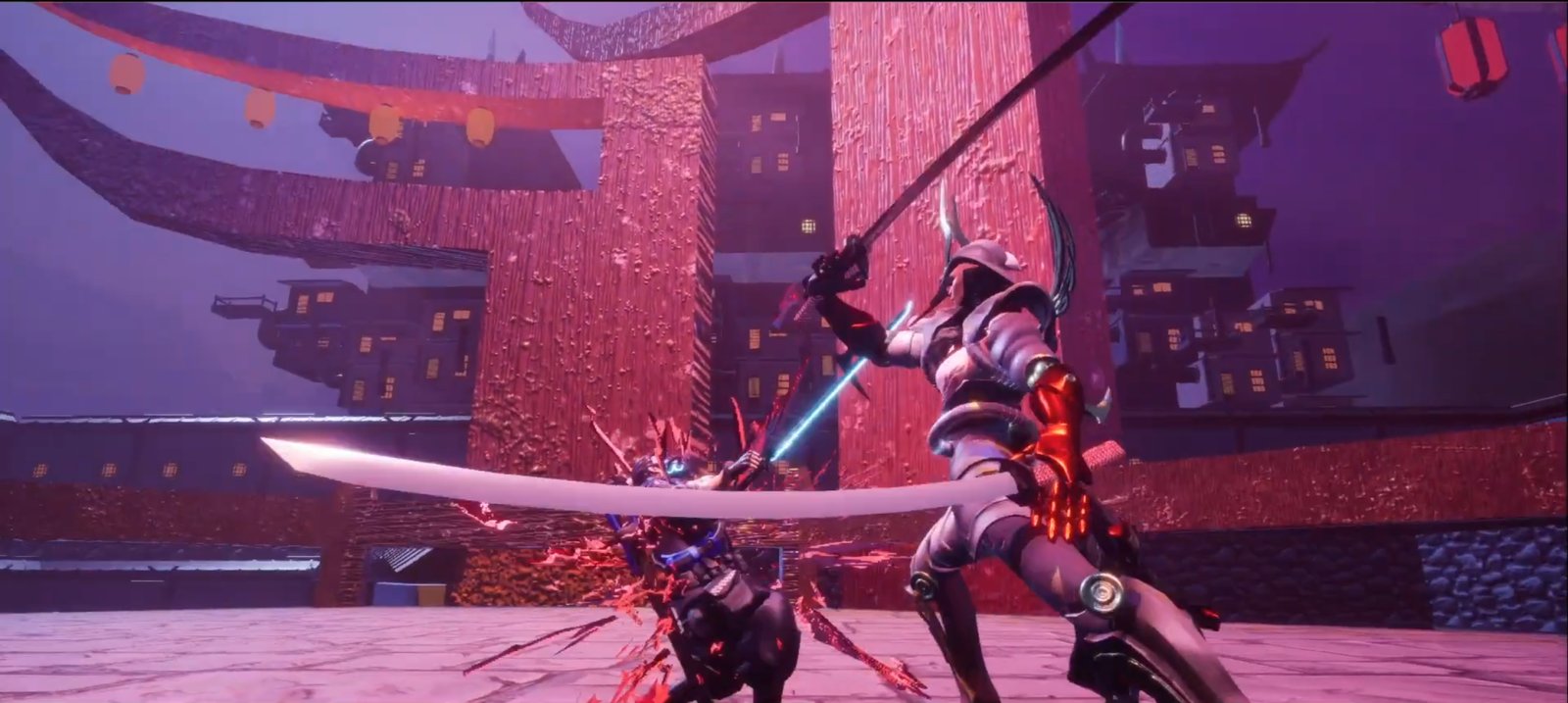
Highlights
- Team of 19 (5 engineers, 3 designers, 10 artists, 1 audio engineer) over ten months.
- 62 C++ files across the Runtime and Editor modules. 107+ Blueprint assets.
- Built the pause menu: main UI, quit/restart confirmations, settings panel, Wwise SFX, and pausing the combat state machine via `FTimerHandle activePause`.
- Hitstop inside `CombatActionManager`, with per-action frame counts on `FCombatAction`. Designers tune each attack's feel without touching code.
- `UHelperFunctions` Blueprint library with 4 utilities (rotation targeting, frenzy damage scaling, player access, relative positioning), callable from C++ and Blueprints.
- Wwise audio middleware, Enhanced Input, and CommonUI across the UI stack.
- Jenkins for automated builds. ClickUp for bug tracking.
Stack
Problem
A ten-month Unreal Engine 5 production with a 19-person team, building a third-person action combat game. My scope: a pause menu that cleanly suspends a live combat state machine, hitstop freeze frames that feel punchy without desyncing the animation graph, and a helper library that engineers and designers could both call from anywhere.
Approach
Pause menu. Built in C++ and Blueprints: the main pause UI (GameUI_BP_Pause), quit-confirm overlay, restart-confirm overlay, settings panel, and the control-panel screens. Wwise integration for pause SFX (hit, button hover, button press). Ties into CombatActionManager via an FTimerHandle activePause handle, so combat stops ticking while paused and resumes on the same frame.
Pause menu / combat state-machine handoff34 linescpp
// GameUI_PauseSubsystem.h
UCLASS()
class UGameUI_PauseSubsystem : public UWorldSubsystem
{
    GENERATED_BODY()
public:
    UFUNCTION(BlueprintCallable) void Pause();
    UFUNCTION(BlueprintCallable) void Resume();

private:
    FTimerHandle activePause;
    TWeakObjectPtr<UCombatActionManager> Combat;
};

// GameUI_PauseSubsystem.cpp
void UGameUI_PauseSubsystem::Pause()
{
    if (Combat.IsValid())
    {
        Combat->SuspendTicks();                           // combat freezes
        GetWorld()->GetTimerManager().PauseTimer(activePause);
    }
    ShowPauseWidget();
}

void UGameUI_PauseSubsystem::Resume()
{
    HidePauseWidget();
    if (Combat.IsValid())
    {
        GetWorld()->GetTimerManager().UnPauseTimer(activePause);
        Combat->ResumeTicks();
    }
}
Hitstop. Frame-counted freeze-on-hit inside CombatActionManager. A bool hitstop_active flag and an int hitstop_frame_counter drive the freeze: on a confirmed hit, SetHitstop(true) flips the flag; the manager's tick skips action updates while the counter increments; at the per-action Hitstop_frames ceiling, it auto-releases. Per-attack frame counts live on the FCombatAction struct so designers can tune feel per move without touching code. Counting animation frames rather than wall-clock seconds keeps freeze duration deterministic across frame-rate spikes.
Hitstop: frame-counted freeze-on-hit in CombatActionManager30 linescpp
// CombatActionManager.h
struct FCombatAction
{
    // ... other fields ...
    int Hitstop_frames = 3;   // per-move ceiling, designer-tunable
};

// CombatActionManager.cpp
void UCombatActionManager::TickComponent(float DeltaTime, ...)
{
    if (hitstop_active)
    {
        // Frozen: skip action ticks, count one frame, auto-release.
        ++hitstop_frame_counter;
        if (hitstop_frame_counter >= CurrentAction.Hitstop_frames)
        {
            SetHitstop(false);
            hitstop_frame_counter = 0;
        }
        return;                    // nothing else runs while frozen
    }
    AdvanceAction(DeltaTime);      // normal path
}

void UCombatActionManager::OnHitConfirmed(const FHitResult& hit)
{
    // Only flip the flag on a confirmed hit; the tick does the rest.
    SetHitstop(true);
    hitstop_frame_counter = 0;
}
UHelperFunctions (Blueprint library). A UBlueprintFunctionLibrary exposing four utilities used across the project via BlueprintCallable: FindRotationDegrees (rotation targeting for combat positioning), CalculateFrenzyDamage (frenzy-scaled damage with level-based stat curves), GetPlayerCharacter (safe player access from anywhere), and GetPositionFromRelative (relative-space positioning). One implementation, called from both C++ combat code and Blueprint event graphs.
UHelperFunctions: one Blueprint library, four utilities28 linescpp
UCLASS()
class UHelperFunctions : public UBlueprintFunctionLibrary
{
    GENERATED_BODY()

public:
    // Rotation targeting: degrees from Source to Target in the XY plane.
    // Used by combat positioning and camera-relative input mapping.
    UFUNCTION(BlueprintPure, Category = "Isshin|Math")
    static float FindRotationDegrees(FVector Source, FVector Target);

    // Frenzy damage scaling: base damage scaled by the player's
    // current frenzy level using the level-stat curve.
    UFUNCTION(BlueprintPure, Category = "Isshin|Combat")
    static float CalculateFrenzyDamage(int32 BaseDamage, int32 FrenzyLevel);

    // Safe player access from any UObject context.
    UFUNCTION(BlueprintPure, Category = "Isshin|Player",
              meta = (WorldContext = "WorldContextObject"))
    static AIsshinCharacter* GetPlayerCharacter(
        const UObject* WorldContextObject);

    // Relative-space positioning: offset in Source's local frame,
    // returned in world space. Used for attach points and VFX.
    UFUNCTION(BlueprintPure, Category = "Isshin|Math")
    static FVector GetPositionFromRelative(FVector Origin, FRotator Rot,
                                           FVector LocalOffset);
};
Other work. I also worked on many other Blueprints and systems during production. The team used Jenkins for automated builds (so designers and artists always had a recent build without waiting on a programmer) and ClickUp for bug tracking.
Why these choices
- Unreal Engine 5.2
- Suited a 19-person team: high-end rendering, a mature animation graph, and Blueprints, which let designers and artists iterate without a C++ rebuild.
- Hitstop via frame counter (not wall-clock seconds)
- Counting animation frames keeps the freeze the same length through frame-rate spikes and matches how animators think about impact frames.
- UBlueprintFunctionLibrary for helpers
- Designers and engineers both needed the same utilities. A Blueprint function library exposes the C++ functions to event graphs with no extra glue, so one implementation serves both.
- Wwise (audio middleware)
- Gave the audio engineer event-driven sound, dynamic mixing, and a proper authoring tool. Each pause-menu sound is a one-line `AkAudioEvent` reference, with no custom sound manager.
- Jenkins + ClickUp
- Jenkins ran automated builds, so the whole team had a recent build every day without asking a programmer. ClickUp handled bug reports and task triage.